It might be a little difficult to get the best out of Skoda’s new eco-minded Fabia – so is this extra frugal version of the VW Eos any better?
The sun-seeking coupé-cabriolet is the latest model in the German maker’s range to be offered in BlueMotion trim. That means it features stop-start, longer gearing, regenerative braking and low-rolling-resistance tyres.
When fitted to this 138bhp 2.0-litre turbodiesel model, the tweaks hike fuel economy to an impressive 58.9mpg on the combined cycle. It also puts out only 129g/km of CO2 – which means a road tax bill of £90 a year, as well as a competitive tax rate for company car users.
So the Eos looks good on paper. But how does it shape up on the road? Well, the diesel engine is very quiet and smooth, and provides peppy performance – although you do notice the long gearing. Even so, with 320Nm of torque, the TDI unit has plenty of grunt and flexibility, which should mean owners will be able to get close to VW’s fuel economy claims.
Aiding this is the unobtrusive stop-start system – as you come to a halt at traffic lights, you barely notice it cutting the engine’s power, then firing it up again. The long gearing means this Eos excels on motorways.
And although the folding metal roof can be a little creaky over bumps when it’s fixed in place, when you fold it – a process that takes just a flick of a switch – there’s very little in the way of buffeting. So high-speed cruising is very relaxing. Factor in composed handling and a comfortable ride, and you’ve got a car that’s easy and enjoyable to drive, whether around town or on the open road.
The Eos falls down slightly on its standard equipment list – it’s short on goodies when compared to newer rivals such as the Renault Mégane Coupé-Cabriolet. This SE model costs £24,570, but Bluetooth phone connectivity, cruise control, climate control and an iPod dock are all optional extras. Nevertheless, it should hold on to its value well, and as an all-rounder the Eos still makes a great deal of sense.
The new SLK will arrive just in time for summer, but does Mercedes new roadster have what it takes to be called a mini SL?
Is this the car that finally gives the Mercedes SL a baby brother? The German company claims that the all-new third-generation SLK roadster is more luxurious, comfortable and fun to drive than ever. But is that really the case? We tried the new model ahead of its UK on-sale date in June.
The new SLK is certainly a more grown-up machine. From the moment you set eyes on it, you get the feeling that it really is a mini SL. It’s much more spacious inside, too, thanks to the fact it’s 31mm longer and 33mm wider than the car it replaces, and the main difference is that there’s a lot more shoulder room.
The new car is stiffer and lighter, too, thanks to more extensive application of high-tensile steel and aluminium. The latter is used for the front and rear cross members – as well as the bonnet and front bumper as before – while carbon fibre has been used for the rear body panels. Further weight is lost by using a magnesium frame for the folding hard top, which also features a new, faster electric mechanism.
There are three options to choose from when it comes to the new SLK’s roof. The the standard ‘vario’ roof, the same top in a darker finish than the rest of the bodywork, or the optional Magic Sky Control roof. The latter adds around £2,000 to the SLK’s price, but it’s an option that’s well worth it, particularly for UK buyers. Why?Because it comes with special glass that allows the driver to change the roof’s transparency. It can be darkened to keep the cabin cool on hot days, or it lets in lots of light in winter to give you a ‘roof down’ feel.
It works very well – indeed, you don’t even need to use the air-conditioning when it’s hot. All you have to do is to push a button above your head, which generates an electric charge that causes the particles in the glass to realign themselves in order to let light through. When this charge is interrupted, the particles reorganize themselves to block the light. Mercedes first used the system on the Maybach 62 limo, although it couldn’t perform the cooling function it manages in the SLK.
There are other highlights inside. The dashboard is sportier and more modern, courtesy of elements inspired by the SLS AMG supercar, while the boot is bigger, with a twin-height floor for bulky items. The rear-wheel-drive chassis features a revised ESP system that adds torque vectoring brakes that prevent understeer in corners.
Other tweaks include softer standard suspension. In addition there’s a Sports suspension setting and adjustable electronic dampers, which provide a smooth ride on poor surfaces and become stiffer under hard cornering.
From June, there will be three engine options.The SLK 200 with a 181bhp 1.8-litre turbo petrol engine, the SLK 250 with a 201bhp version of the same engine, and the 302bhp 3.5-litre V6 powered SLK 350. Later in the year the SLK 250 CDI arrives, packing a 201bhp 2.2-litre diesel, while the SLK 55 AMG, which gets a 422bhp 5.5-litre V8, joins later.
We tried the SLK 250, which does 0-60mph in around six seconds, yet returns 44mpg. It sounds good, too, thanks to a module placed in the throttle valves which selects pre-defined frequencies and delivers them to the cabin. It’s not all about the sound, though as the engine is responsive across the rev range, while the optional seven-speed automatic gearbox is smooth and precise.
On a twisty road, the chassis is impressively stiff, even with the top down, but the SLK isn’t the sportiest roadster on the market – our standard steel-sprung car felt more comfort-oriented. Perhaps the other suspension set-ups will offer a more engaging experience. But for now, this is a desirable drop-top that certainly feels every inch the baby SL.
STYLING Buyers who liked the bold looks of the outgoing BMW 5-Series are likely to be disappointed by the latest car. Taking it cues from the large 7-Series, the newcomer is a little conservative. Standard SE models get alloy wheels, while racy M Sport version are distinguished by a rather aftermarket looking aerodynamic bodykit, larger rims and a lower ride height. On the plus side, the versatile Touring estate is handsome and well proportioned.
INTERIOR While the 5-Series’s exterior is rather uninspiring, the cabin sets the standard for the class. Not only is it spacious, it’s beautifully built and thoughtfully laid out. And as you’d expect from BMW the quality of the materials is straight out of the top drawer. Refinement is excellent, with road, wind and engine noise kept to minimum. All models get leather trimmed seats as standard, together with a classy high gloss black finish for the dashboard, centre console and door pulls. Climate control and ambient cabin lighting complete the list of executive car must-haves.
DRIVING AND PERFORMANCE There’s no escaping from the BMW 5-Series’s size, and down twisty back roads it feels very big. Fortunately the rear-wheel drive chassis feels composed, there’s plenty of grip and the steering is direct. Sadly, the 5-Series lacks the engagement and feedback of its predecessor, plus M Sport versions suffer from a firm ride. Optional adaptive dampers and four-wheel steering help to improve the car’s dynamics, but come at a considerable financial cost.
MPG AND RUNNING COSTS As ever, the BMW’s engine line-up doesn’t have a weak link, with all units delivering a fine blend of performance and economy. The entry-level 2.0-litre 520d will sprint from 0 to 60mph in 8.1 seconds and return an impressive 57.6mpg.
PRACTICALITY Given its huge exterior dimensions it’s no surprise to find the BMW 5-Series boasts a spacious interior. Occupants in the rear are treated to generous head and legroom, plus there are plenty of useful storage cubbies dotted about the cabin. Open the tailgate of the saloon and you’ll discover s a useful 520-litres of carrying capacity. However, a folding rear bench is a costly optional extra. The Touring can accommodate a maximum of 1,670-litres of luggage, although this trails the Mercedes E-Class estate by 280-litres.
RELIABILITY AND SAFETY The BMW 5-Series scored well in every area of the EuroNCAP test, making it one of the safest cars in the class. A strong structure, six airbags and anti-whiplash head restraints feature on all cars, while a full complement of electronic safety aids help you avoid an accident in the first place. The previous generation 5-Series was marked down in our annual Driver Power survey for its poor reliability – expect an improvement for the latest version.
Carbon fiber, handling and ultra lightweight! That’s the guiding principle of BRABUS for refining the Mercedes SLS AMG. The exclusive sport program comprises aerodynamic-enhancement components made from carbon fiber, ultra-lightweight forged wheels, an electronically adjustable smooth-ride suspension (Ride Control) suspension, a titanium exhaust system with bypass gate, and BRABUS leather.
Extremely light yet enormously strong carbon fiber identical to the one used in Formula 1 racing was chosen as the material for the BRABUS aerodynamic-enhancement components. The components were developed in the wind tunnel. They give the gullwing car an even more striking appearance while optimizing its aerodynamic properties. All components are available either made from clear-coated carbon fiber for a true racing flair or can be painted to match or contrast with the car’s exterior color.
The front fascia of the coupe receives a visual upgrade with the BRABUS front spoiler. But that’s not all: The spoiler further reduces lift on the front axle at high speeds which results in even better directional stability. The two BRABUS covers for the upper air inlets in the bumper lend the SLS an even more striking face while optimizing the cooling air supply.
BRABUS also lends the sides of the SLS a sharper profile. The new air outlets for the front fenders feature a modern design with integrated blue-illuminated BRABUS lettering. The illumination is activated via the keyless-entry remote or by pulling on a door handle. BRABUS also adds some more visual pizzazz to the rear appearance of the SLS with the BRABUS rear spoiler and the BRABUS rear fascia element that features custom-tailored cutouts for the four exhaust tips of the BRABUS sport exhaust system.
Forged wheels that were custom-developed for the SLS are also elementary for the electrifying BRABUS look. By choosing a staggered tire/wheel combination with diameters of 20 inches in front and 21 inches on the rear axle BRABUS further emphasizes the sporty character of the two-door car. The ultra-light BRABUS Monoblock F PLATINUM EDITION cross-spoke wheels are up to twelve percent lighter than the stock wheels of the SLS and are mounted in size 9.5Jx20 in front and in size 11Jx21 on the rear axle. The extremely wide high-performance tires in sizes 275/30 ZR 20 and 295/25 ZR 21 are supplied by BRABUS technology partners Pirelli and YOKOHAMA.
Another custom development is the height-adjustable BRABUS smooth-ride suspension (Ride Control). It can lower the ride height of the sports car by up to 40 millimeters (1.6 inches). At the push of a button the driver can choose between damper settings that offer a more comfortable or sportier ride compared to the production suspension. To complement this suspension BRABUS will soon offer the BRABUS Front Lift system. It raises the front of the car by some 50 millimeters (2 inches) at the push of a button to safely navigate steep parking ramps or other obstacles.
While engine tuning for the 6.3-liter V8 is still in the final development phase there already is an extremely lightweight BRABUS titanium sport exhaust system with four slanted exhaust tips. The tips have a diameter of 84 millimeters (3.3 inches). This exhaust system weighs 12 kilograms (26 lbs.) or 40 percent less than the production exhaust and adds an extra ten horsepower to the engine’s output. A special feature of this exhaust system is a pneumatically controlled bypass gate that is activated from the cockpit. The normal mode represents a “coming home” sound level that is quieter than the production exhaust. It appeals especially to the neighbors when the SLS returns home late at night. With open bypass gate the eight-cylinder engine sounds even sportier than with the stock exhaust system.
For the cockpit of the two-seater the BRABUS interior designers have developed exclusive accessories and masterfully crafted custom interiors. The speedometer with 400-km/h scale (250 mph) already hints at the car’s future performance with BRABUS engine tuning. An ergonomically shaped sport steering wheel is also part of the BRABUS customization program as are stainless-steel scuff plates with illuminated BRABUS logo and matte-anodized pedals. The BRABUS upholstery shop creates fully custom interiors for the SLS from top-quality materials. Customers can choose from different types of leather and Alcantara in any desired color and design to suit their individual tastes. BRABUS can also fulfill individual requests for the trim on dashboard, center console and door panels. BRABUS manufactures carbon-fiber and wood trim sets in any color and with any desired surface finish.
When you launch a vehicle during the year's most over-hyped estrogenfest, you're obviously trying to appeal to a specific demographic.
Specifically, not us. There's a reason we haven't taken a crack at the Mercedes-Benz GLK until the sequel to Sex and the City hit the screen. It was just too easy to pigeonhole this cute 'ute as nothing more than a boxy four-wheeled trinket – a cynical fashion accessory designed to compliment your rat-faced pooch and Manolo Blahniks (yes, we had to look that up).
But a funny thing happened on the way down I-5.
While blasting the stereo and hauling along at a decidedly Germanic clip, all of the stereotypes about the GLK's target demographic flew out its expansive sunroof. For as much as we dislike the mere idea of "entry-level luxury" – and in particular the scads of pseudo-SUVs that populate it – the GLK started to make sense. It's well proportioned, has adequate power and comes with nearly enough amenities to match its tri-pointed badge. We actually enjoyed it, even though our manhood might've taken a hit in the process.
Contrary to what you might expect, successfully keeping tradition alive in the automotive world isn't just about periodically mining one's stylistic back catalog or simply refusing to change altogether.
To convincingly abide by the spirit of one's history without running the risk of extinction, or worse – self-parody – requires stealthy innovation, and to do so is a decidedly tricky undertaking.
Just ask Bentley. The British automaker has a long history of artfully highlighting its considerable heritage, from the exploits of the fabulous Bentley Boys to the timeless craftsmanship employed in its interiors. And despite the upright look of its new flagship, the 2011 Mulsanne, much thought and effort has been exerted into making what is actually a very modern proposition seem... traditional. Accomplishing this in an authentic and timeless manner is particularly important for an automaker like Bentley. Given the rather lengthy model lifecycles that small-volume manufacturers are often forced to adopt, it's crucial to nail the entire package the first time. Follow the jump to see if they've managed the feat.
Depending on wheelbase, the 2011 model VW Phaeton is between 5.06 and 5.18 metres long. As mentioned above, a completely new front section has been developed for this flagship of the Volkswagen brand. In keeping with the current Volkswagen design DNA, its form is dominated by horizontal lines. Unlike all other Volkswagens created to date on the basis of this new DNA, the Phaeton does not have a shiny black radiator grille cover, but instead a completely new chrome element. Along with the likewise restyled headlights, this radiator trim is a major influence in the new Phaeton’s design and underlines its uncompromisingly independent character. In detail the new grille is more upright, while its stricter lines and impressive alternation of materials between polished and matt chrome make it even more striking. The horizontal linking of grille and headlights follows the Volkswagen design criteria and impressively emphasises the vehicle’s width. As a sign of its class specific to this model the Phaeton also features three-dimensional moulding of the grille and bonnet, with precise edges that carry the grille’s heightened expression of quality on into the sculptured contours of the vehicle body. Once again in the centre of the grille is the classic VW badge, which now – despite integrating the ACC (automatic distance control) system’s radar sensors – has a new-look surface design.
To the left and right of the grille are new Bi-Xenon headlamps, which are standard across the range. Integrated within them are cornering and adaptive lights. Not just in visual terms, but from a technical perspective too, this is a whole new generation of headlamps. Firstly, the indicator and adaptive cornering lights are highly visible and stylistically striking LEDs. Secondly, as with the new Touareg, the Phaeton will also be available with optional Dynamic Light Assist. Using a camera integrated into the rear-view mirror, this complex technology ‘detects’ other road users and regulates illumination of the carriageway accordingly (see separate section on Dynamic Light Assist).
The bumper has also been redesigned in keeping with the radiator grille and headlamps. Here too horizontal lines form the guiding principles of the new design. Even the fog lamps have been designed as narrow, horizontal LED strips. Last but not least, the bottom final section of the bumper is now also colour-coordinated with the car body. Compared to the previous model the new generation Phaeton thus looks even sportier and more imposing on the road. Also modified, the back of the car underlines this impression. The design team decided here not to change the classic, clear and powerful basic style that this area has always had, but instead to develop new LED rear light clusters. Each cluster features dotted lights and an M-shaped LED strip. The result is an unmistakable, elegant look both in daylight and at night. Also new is the VW badge – now likewise in 3D format – on the boot lid.
As at the front, the rear bumper has also been redesigned. It now has a new, three-piece chrome bar and the section of the bumper trim near the road is now also colour-coordinated with the car body. The same goes for the bottom section of the side skirts. Also noticeable in silhouette view are modified side trim strips, narrower LED indicators in the wing mirrors and new 18-inch (‘Experience’) alloy wheels.
Phaeton interior
The Phaeton’s interior ranks as one of the most elegant, high quality and comfortable in the entire premium class. The 4-zone air-conditioning system, for example, that works totally free of any draughts, and the award-winning ergonomic. All of the Phaeton interior’s functions are also intuitive to use. In addition to the version with three rear seats (5-seater), the limousine can be optionally ordered with two electrically adjustable individual seats (4-seater). Furthermore a version of the Phaeton is also available that is twelve centimetres longer. Meanwhile, the limousine can be almost infinitely personalised with a wide range of leather, alcantara and wood trim, plus optional equipment such as a fridge or multimedia systems from Volkswagen Exclusive. This also applies to the completely redesigned multifunction steering wheel. It can be ordered either in leather or in a wood/leather combination matching the relevant wood trim features.
Information and entertainment systems
The intuitive nature of the Phaeton’s controls has been fully transferred to the new generation of radio and navigation systems (RCD 810 and RNS 810). Equipped with an 8-inch touchscreen, the systems form a functional unit with the air-conditioning and multimedia controls.
Use of online services: Volkswagen is for the first time offering an Internet-based Google function in the new Phaeton as a map display add-on for the RNS 810 radio navigation system with 30-gigabyte hard drive. The relevant data gets loaded onto the system over the Internet via mobile telephone and a proxy server specially set up for the purpose. The visualisation on the touchscreen’s display is the same as the Google Maps ‘Satellite’ view familiar from the conventional Internet and equivalent to the iPhone’s ‘Hybrid’ view. In the Phaeton the satellite images naturally get supplemented by the navigation system’s appropriately highlighted route recommendation.
Particularly interesting in this feature are the POIs (points of interest) that can be accessed. Addresses, tourist sights, businesses, sports venues, doctors’ surgeries and restaurants integrated within Google can be selected in seconds and transferred directly into the route navigation. In perfect conditions the system loads the data via UMTS connection. The telephone itself gets completely integrated into the system via remote SIM access profiles (rSAP). Alternatively, anyone who wants to use a mobile phone with hands-free profiles (HFPs) can also do this linked up with the new Phaeton (in this case Google is disabled). In HFP mode phones that are ‘Phaeton compatible’ include, for example, Apple’s iPhone.
Road sign recognition: However the latest generation Phaeton’s information and entertainment system can do even more! By virtue of the camera integrated in the rear-view mirror the Phaeton now detects road signs and shows the relevant information on the system’s touchscreen and/or the multifunction display (between speedometer and rev counter). It displays not only the maximum permitted speed but also any important additional information (e.g. ‘10pm – 6am’ or ‘When wet’). The system will also be able to alert drivers to overtaking restrictions – the first vehicle in the world to do so!
For the RNS 810 radio/navigation system further add-on options are also available. These include a rear-seat multimedia entertainment system (the High End) and a 1,000-watt sound system with digital 12-channel amplifier from hi-fi specialists Dynaudio.
Electronic assistance systems
The Phaeton’s electronic assistance systems include Dynamic Light Assist (dynamic main beam control), ACC (automatic distance regulation), Front Assist (surroundings monitoring) and Side Assist (lane change assistance). A tyre pressure control system also provides standards of safety.
Dynamic Light Assist in detail: Volkswagen is introducing for the Phaeton a new optional camera-based main beam control system called Dynamic Light Assist, which represents a major technical innovation in passive safety. Linked in with a camera integrated behind the windscreen the system keeps the main beam modules of the standard Bi-Xenon headlamps permanently on. It merely masks the areas of each beam that it calculates could potentially disturb other road users. For the driver this means appreciably more light, clearly enhanced safety and a more relaxing drive. The function is achieved by an additional aperture between the reflector holding the Xenon bulb and the lens. Combined with an intelligent, lateral tilting of the complete module (via the cornering light function) and individual control of the left and right headlights, this additional aperture arrangement enables the light source to be masked only in those areas that could otherwise cause other motorists to be dazzled.
Thanks to the front camera the cornering light control system detects the exact position of the vehicle in front and at speeds of 60 km/h or more ‘pushes’ the cone of light up to the rear of the vehicle or even to its side and on past it – without dazzling the driver. The increase in safety and driver convenience provided by Dynamic Light Assist is considerable and can be ranked on a par with that achieved at the time by the introduction of Xenon technology.
ACC and Front Assist in detail: Automatic distance regulation (ACC) relieves the driver of the burden of active braking and acceleration. ACC significantly improves driving comfort and passive safety, especially on longer motorway journeys. At the same time the system (when activated) ensures adherence to the legally prescribed minimum distance from the vehicle in front.
An integral component of ACC is Front Assist. This ACC extension is designed to help prevent rear-end collisions. Using a radar sensor, the system monitors the distance to the vehicles in front of the Phaeton. If this is becoming too short, the system alerts the driver in two stages. At the same time the vehicle is prepared for possible emergency braking by the driver. Even before certain situations arise, Front Assist takes preventative action by putting the brakes into a preconditioned status that otherwise only gets activated when the brake pedal is pushed. The system thus acts as a means of reducing the car’s stopping distance.
Automatic distance regulation is operated via relevant buttons on the redesigned multifunction steering wheel. It is operated in many aspects in the same way as the cruise control system. With ACC enabled the car automatically slows down (if necessary to a stop) and speeds up within a speed range set in advance by the driver. ACC can be switched on at speeds of between 30 and 200 km/h. The system then uses radar to detect any traffic within an angle of 12 degrees travelling up to 200 metres in front of the Phaeton. ACC is enabled and disabled via an ON/OFF button on the left of the multifunction steering wheel. All of the driver assistance systems, including ACC, can also be switched on or off simultaneously by pressing a button in the centre of the indicator stalk for more than a second. The ACC also gets disabled as soon as the driver pushes the brake pedal. The system can be switched back on via the ‘Resume’ button on the steering wheel. It then continues to use the desired speed set prior to it being disabled.
The key information about the automatic distance regulation system can be seen quickly and clearly laid out on the multifunction display.
Side Assist in detail: Another assistance system in the Phaeton is the lane change assistant (Side Assist). At speeds of 60 km/h or more this system monitors the area behind and to the side of the Phaeton via radar sensors in the rear bumper (one sensor each for the area to left and right) and indicates via a warning light in the wing mirror frame any risk of potential collision. The area monitored by the sensors covers a distance of around 50 metres to the rear and 3.6 metres to the side of the car.
If Side Assist detects a critical situation to the left or right of the Phaeton and the driver has not switched on the blinker to indicate a change of lane, the warning light in the wing mirror frame comes on to draw attention to the special traffic situation. If, however, the driver turns on the indicator while there is traffic in the adjacent lane, the light flashes four times to warn of the potential danger. The brightness of the warning lights can be adjusted to one of five levels via the multifunction display. In an interesting interlinking of the car’s systems the ambient brightness detected at any given time by the rain and light detection sensor gets automatically taken into account in determining the brightness level.
German firm Xentac reveals plans to transform the mighty Maybach 57S limo into a sporty 2-door coupe. Never before has a car promised such an impressive combination of supercar looks and performance paired with unrivalled luxury. This is Xentac’s vision of the ultimate Maybach 57S. Already given the go-ahead by the Daimler owned company, it appears Maybach has no problem handing over the reigns to the specialist German engineering firm who will make the necessary changes to turn the four-door limo into a two-door sports coupe.
Developed in close cooperation with Maybach, the complicated modification process will mean that the A-, B- and C-columns all need to be redesigned. The biggest changes being made to the B-column which needs to be moved back by 200mm. Other big differences will include the sharper raked roofline, restyled front and rear ends, and body that has had to be widened. The overall wheelbase of the car will remain the same though, measuring a lengthy 3.39m. Newly designed 20- or even 21-inch alloy wheels will also be available.
Under the bonnet the coupe will remain to get its power from the Mercedes sourced 6.0-litre bi-turbocharged V12. Delivering 617bhp, 0-62mph will take only 5.0 seconds, with a top speed of close to 170mph. Xentac are planning on producing only 100 versions of the 57S built and expect a hefty price tag of around £575,000 to accompany.
The twin-turbo, 400-horsepower Alpina B3S has been let loose on the UK market. With just about 400 pound-feet to get you off the line you'll get from 0-to-60 in 4.7 seconds.
That might not sound too impressive for an Alpina, but you'll be able to hang with Porsche Carrera S's, and that's not bad for a 3 Series. Staying away from hard going will get you another impressive number, though: 24.2 combined miles per gallon (29.1 Imperial). The Alpina B3S is offered in Saloon, Touring, Coupe and Convertible, with deliveries beginning in July.
Porsche made an impressive showing at the 24 Hours of Nürburgring this year with its 911 GT3 R Hybrid.
But don't think for even one power-boosted second that its hybrid initiative was a one-time affair for the Stuttgart-based automaker. Not, at least, if the latest reports from Germany prove accurate.
According to Auto Motor und Sport, mere days after the conclusion of this year's race, Porsche is already preparing to campaign a competition-spec version of the 918 Spyder at the Ring next year. The 918 Spyder concept debuted just a few months ago at the Geneva Motor Show to rave reviews. Derived from the same program that gave birth to the 917, 911 GT1 and RS Spyder, the 918 Spyder packs 718 horsepower of combined output, 90 miles per gallon and a simulated Nordschleife lap time of 7:30, making it an ideal machine to contest the grueling endurance race. We'll just have to wait a year to find out whether it lives up to its promise or falls victim to arch-rival BMW.
Hot on the trails of BMW's victorious return to the 24 Hours of Nürburgring this year, rumors have surfaced that an even hotter version of the M3 GTS is on the way.
The orange wündermobile was unveiled barely six months ago, complete with 450-horsepower V8, upgraded brakes, rolling stock, suspension and aero package and a stripped interior. But if that's not enough to tickle your fancy, a few supposedly informed fanboys say that Munich is preparing to celebrate – and bid farewell to – the E92 M3 with an even fiercer derivative.
Tentatively dubbed the M3 GTS-R, the ultimate 3 Series is expected to benefit from yet another power upgrade, plus more carbon fiber body panels – all decked in matte black – to further reduce weight and pack even wider wheel arches packing Y-shaped five-spoke rims and blending into fat side sills. There's even word of a streetable implementation of the company's F1-derived KERS regenerative braking system for push-to-pass boost. Sounds tasty; stay tuned for more.
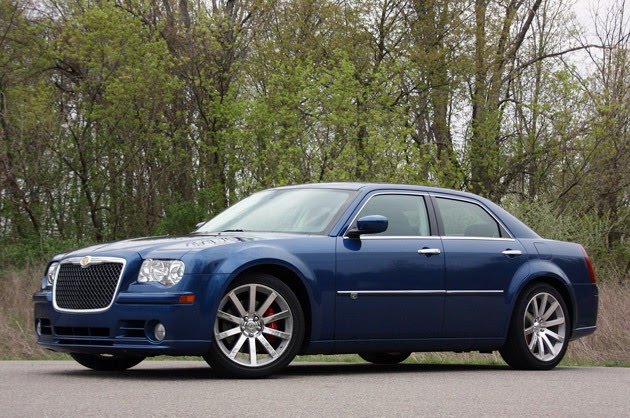
If the economic downfall of 2008 had happened just a few years earlier, the Chrysler 300C SRT8 probably wouldn't exist. Think about it: when the nation was on the verge of $4.00/gallon gasoline and people were doing everything possible to get out of their fuel-sucking SUVs and into smaller, more efficient vehicles, a 425-horsepower flagship sedan with a free-breathing 6.1-liter Hemi V8 doesn't make a whole lot of sense. But then again, did it ever?
The 300C SRT8 is the product of a pre-castrated Chrysler. This was a time of Viper-powered Rams, Hemi-powered Jeeps and SRT-badged Neons. "You want it, you got it." Chrysler wanted the 300C SRT8 to start a new trend of muscle sedans – a land where quarter-mile times reigned supreme, and booming exhaust notes were all that mattered. This trend never really caught on (save the Cadillac CTS-V, which has been honed to be one hell of a machine), and at the end of the day, Chrysler was left with a big, heavy, powerful sedan that didn't offer much in the way of refinement and carried a near-$50,000 price tag.
But despite its flaws – and there are quite a few – we still think of the 300C SRT8 as a guilty pleasure. It has all the ingredients of an American muscle car wrapped in a four-door, luxury(ish) package. We'd probably never buy one or recommend buying a new one to a friend, but if we're totally honest, there's still something about the SRT8 that gets us all giddy when one comes through the Autoblog Garage. Make the jump to find out why.
Before Brabus turned its T65 RS Vanish over to its rightful owner, it took the car to Glamor Shots for a round under the lights and here are the results.
The former Mercedes-Benz SL65 AMG Black Series is now a twin-turbo, 800-horsepower brute with 811 pound-feet of electronically limited peak torque – the engine's uncorked potential is 1,047 pound-feet. About the only other limit the Vanish has is top speed: it's capable of 206 miles per hour, but is limited to "only" 200.
Your own SL65 AMG Black Series probably won't go that fast right now, but Brabus has good news: everything on the Vanish can be ordered up for your car. Except that "One-off" plaque, of course. Have a look at the Brabus press release after the jump, and at the Vanish from all angles in the gallery of high-res photos below.
Audi dropped a very pleasant surprise on us this afternoon with the long-awaited announcement of the R8 GT.
The Audi R8 V10 was already one of our favorite sports cars in the world (sans the R-Tronic transmission) so how could you make it better? In the immortal words of Colin Chapman, "add lightness." But in a modern sports car required to meet rigorous safety standards, you can only go so far short of a complete redesign. Hence, the R8 GT's lightened chassis benefits from a power boost to boot.
The R8 GT swaps in a thinner glass windshield and polycarbonate rear windows and replaces many aluminum body panels with carbon fiber. By going over every part of the R8, Audi's engineers have carved a total of 220 pounds off the standard R8's curb weight.
The 5.2-liter V10 has been bumped from 525 horsepower to 560, topping its cousin, the Lamborghini Gallardo. The GT is only available with the aforementioned R-Tronic hydraulically actuated semi-automatic, and when pushed to its limit, the R8 GT is claimed to accelerate to 62 miles per hour in just 3.6 seconds and on to 124 mph in 10.6 seconds. The terminal velocity has been increased to 198.8 mph.
Only 333 examples of the R8 GT will be built and the price in Germany is €193,000 ($256,000 USD). No mention is made of U.S. availability, but we'd be surprised if Audi doesn't apportion a few for Stateside consumption. Full details in the press release after the break.
Mercedes-Benz may not have invented the idea of a "four-door coupe" with the original CLS back in 2005, but the German automaker can surely be credited with the recent influx of such designs from automakers as varied and far-ranging as BMW, Jaguar and Hyundai. As such, you can be sure that Mercedes is keenly interested in reinventing the look it made so popular in the first place so as to differentiate itself from its competitors.
As we reported late last month, it seems likely that Mercedes-Benz will use the upcoming Beijing Motor Show to preview its next-gen CLS, along with the introduction of what appears to be a production-ready shooting break design. While the moniker is more often spelled 'shooting brake,' MB is keen to point out that the correct spelling is 'break,' as in breaking a horse that draws a carriage. Whatever the name, we're liking what we see from this concept.
From what we can see in these pictures, which we presume show a conceptual shape that's awfully close to what a future production model will look like, the Mercedes-Benz CLS Shooting Break seems to be a much more successful design than that of the BMW 5 Series GT that it will undoubtedly be compared to. We'd also wager that the rear hatchback and flat load floor would prove fairly useful in real life due to a suitably tall roof without too much downward slope.
Powerplants for the next-gen CLS are also previewed by this concept. Expect a turbocharged and direct injected 3.5-liter V6 engine with over 300 horsepower along with an uplevel turbocharged 4.6-liter V8 that puts out around 435 horsepower and over 400 pound-feet of torque. Those engines will reportedly provide a 25-percent improvement in fuel efficiency over the mills they replace and will route power to the rear wheels through a seven-speed automatic transmission.
Not powerful enough for you? Perhaps the 5.5-liter V8, complete with turbocharging and direct injection, in the AMG model will be more to your liking. How does up to 563 horsepower and 664 pound-feet of torque sound?
Expect to see a sedan (codenamed C218) in addition to this shooting brake (codenamed X218) when the next-gen CLS is finally ready for production.
There was a time, not too long ago, when a BMW M-badged vehicle was feared. In the late 1990s, the E36 M3 Coupe was often regarded as the best-handling two-door on the planet and its sibling, the E36 M3 Sedan, was the fastest four-door in showrooms. The droptop M Roadster offered a viable alternative to a Porsche 911 Cabriolet, while the bad-to-the bone E39 M5 ran without peers thanks to its 400-horsepower V8 .
Today's M models offer excellent performance, but the bar has been raised so high that cheaper upstarts like Mitsubishi and Subaru can give them a run for the money on tracks, not to mention surging premium competitors like Audi and arch rival, Mercedes-Benz and their AMG offerings. Kay Segler, the new chief of BMW's performance-oriented M brand, has taken notice. However, instead of pushing the well-respected division to the head of the pack with even greater levels of performance, Segler says it is time to rethink what his division stands for – meaning BMW M may no longer offer the fastest or most powerful cars possible.
"The measurement of 0 to 100 (km/h) isn't as much a thrill anymore," Segler tells TheDetroitBureau.com. He goes on to explain that it's how a car feels via the driver's "butt-o-meter" matters more. Furthermore, he says the performance M brand needs to shift directions. "We want to make M young again." Segler's goal "is to go towards affordability and freshness." Those are big changes considering the current M lineup represents the flagship of each model range – priced accordingly – along with gigantic SUVs like the 5,368-pound X5 M. Undeterred by the news, we are still holding our breath for a production version of the Concept 1 Series Tii.
According to an Autoblog source close to the project, Mercedes-Benz will go all-hybrid with its next-generation S-Class lineup in America – with the exception of enthusiast-oriented AMG models. The plutocrat cruiser is expected to roll up in 2012, and it is understood that gas-only S-Class models will be the exclusive preserve of the company's performance arm – the German automaker is not talking about offering both regular and hybrid variants of the same model, at least in the States.
Presently, Daimler only offers a single gasoline-electric variant of its W221 S-Class – the S400 hybrid (the range's price leader at $87,950), and it incorporates a 3.5-liter V6 with a mild hybrid assist system for 295 horsepower and 26 miles-per-gallon on the freeway. Other models in current S-Class lineup all have more cylinders and power, including the 382-hp 5.5-liter V8 of the S550 and the twin-turbo 5.5-liter V12 of the S600. It is not immediately clear if company engineers plan to downsize the internal-combustion side of the next S' powertrain equation as a result of the all gas-electric strategy. While we expect Mercedes will offer a range of CDI diesel models in European market, no such model is apparently planned for the States at this time.
While the Daimler board has yet to sign-off on this plan, it appears to be all but certain. Interestingly, our contact indicates that S400 sales are going swimmingly in the States – particularly among Hollywood's green-minded glitterati, a contingent that our source maintains is abandoning their Priuses at a furious rate now that the model has become "something of a pariah" due to Toyota's recent troubles.
Formula One pundits have for years been saying that Ferrari was the team where Fernando Alonso was always supposed to be. The folks at the Scuderia evidently agreed when they finally signed the only driver to beat Schumacher at his own game. And they aren't about to let him forget it now that he's home.
So it should come as little surprise that, after handing him the keys to a Maserati GranCabrio, reports are surfacing that the champ has also received (or is soon to receive) a Ferrari 458 Italia as well. Sources suggest that the car may have been part of his contract.
The car in question was spotted by a FerrariChat forum member while in Maranello, decked out in Bianco Fuji (Ferrari-speak for pearl while) with Alonso's signature logo embroidered into the headrests right below the Prancing Horse... right where it's always belonged.
John Haugland, the man tasked with turning us flacks into ice racers, advised us to do several things the night before our instruction. For whatever reason, being "water positive" stuck with me the most. So before heading to bed I chugged a bottle and a half of water, woke up in the middle of the night, downed the other half and then drank another bottle before heading out to the makeshift circuit. When the time came to man-up in one slightly modified Subaru WRX, I had to liberate some liquid... badly.
Exacerbating my bursting bladder was the near-freezing temps of Park City, Utah, but despite the mid-30s weather and an early morning departure, by the time I rolled up to the staging lights, a fair amount of the course had succumbed to the sun. The result was a circuit comprised of equal parts snow and ice, with a few mud pits thrown in for dramatic measure.
But no matter the state of terra firma, sliding is sliding, grip is grip and opposite lock antics were mine for the taking, so after a quick trip to the port-o-potty I dialed in a few thousand revs, dropped the clutch and sped my way towards the first chicane. It took all of two turns and several muffled orders from Haugland to begin to see the allure of ice racing and understand what our man Tim has been proselytizing in his ongoing series.
My first go-round was suitably slow and occasionally sideways, but for the most part it was an exercise in anticlimactic understeering. And then... epiphany!
Master photochopper Jon Sibal has put digital pen to virtual paper to render up the next BMW M5, but unlike his previous F11 'chops, he's applying his skills to the yet-to-be-confirmed Touring version of the mid-size bahn-burner.
As Sibal points out in his post, BMW has an on-again, off-again history when it comes to five-door versions of the M5, with the E28 and E39 only available sans-hatch, while the E34 and outgoing E60 have been available in five-door form.
There's a good chance that the F11 version will be made, nixing the current model's V10 powerplant in favor of a 570-horsepower twin-turbocharged V8 pulled from the X6 M. However, the chances of the hi-po hatch making it to the States is virtually nill, as the 5 Series Gran Turismo is set to take the standard Touring's place in the U.S. market. So does that mean a M5 GT could be in the works? Here's hoping, and maybe Sibal will render one up in the meantime.